Driving safely requires more than just following road rules — it’s about awareness, anticipation, and control. Among the most frequent and dangerous errors learners make is forgetting to check their blind spots.
This simple mistake often goes unnoticed until it’s too late. Every time a driver changes lanes, merges, or turns without looking over their shoulder, they’re taking a serious risk. The space you can’t see — your blind spot — might be hiding another vehicle, a cyclist, or even a pedestrian.
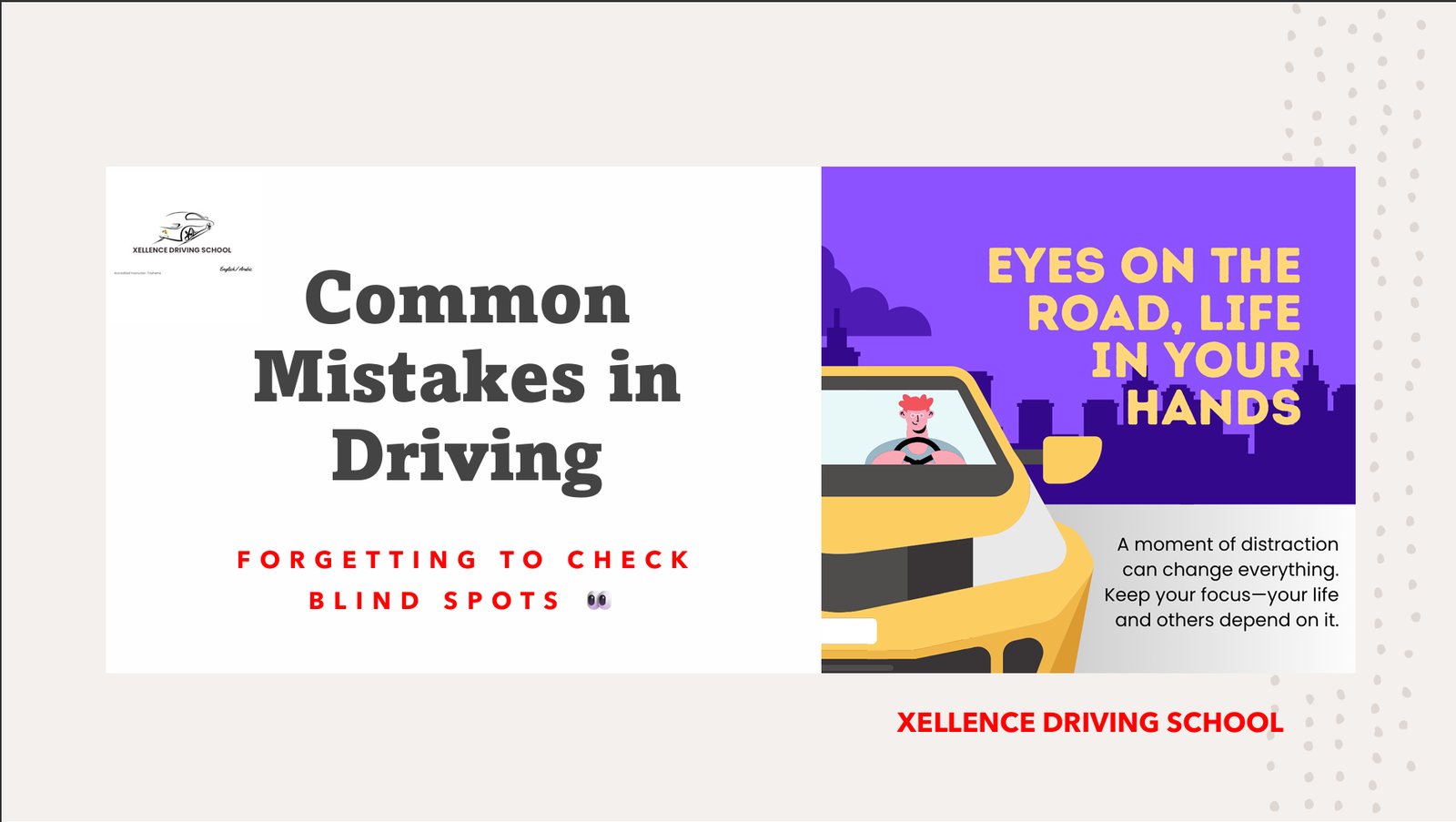
Eyes on the road, life in your hands.
A single moment of distraction can change everything. Staying focused means protecting your life — and everyone else’s.
Whether you’re a new driver or brushing up your skills, mastering blind spot awareness is non-negotiable. It’s one of the most essential habits for preventing collisions and ensuring safe driving every day.
Forgetting to Check Blind Spot
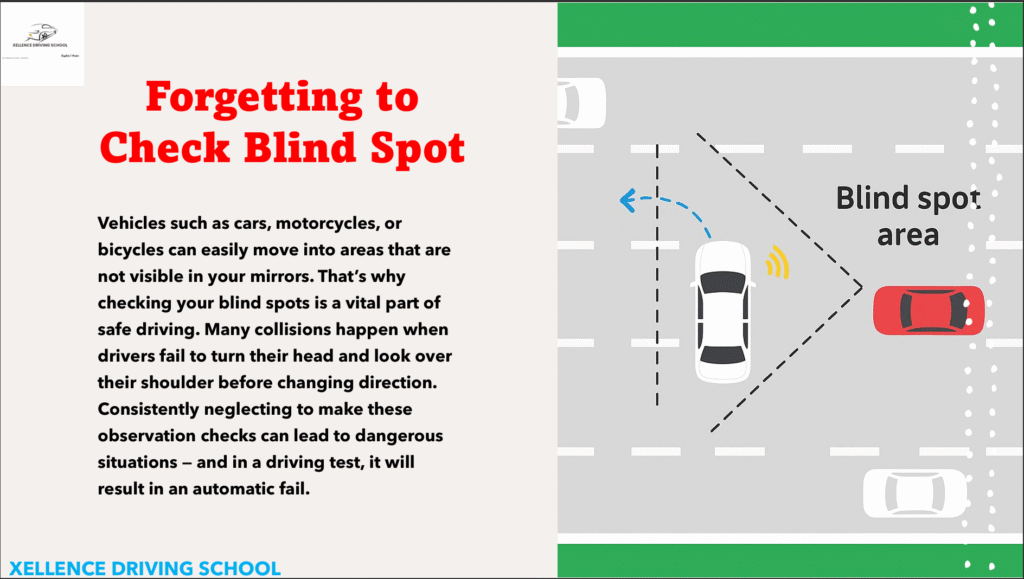
Let’s pressure-test a common misconception: many drivers assume their mirrors show the entire view behind and beside them. In reality, mirrors cover only part of what’s around your car — large areas remain invisible, known as blind spots.
Vehicles such as cars, motorcycles, or bicycles can easily slip into these unseen zones. When that happens, and you change lanes or merge without looking, the risk of collision skyrockets.
This is why checking blind spots is a critical safety step, not a minor extra. It’s one of the first habits we drill into students at Xellence Driving School.
Failing to perform a shoulder check before turning or merging is one of the most common reasons drivers fail their test. It’s also a major cause of road accidents. Consistently neglecting these checks doesn’t just risk your score — it endangers your life.
So before you move, always turn your head, look over your shoulder, and confirm it’s clear. That single movement can prevent a lifetime of regret.
Blind Spot Awareness
Being aware of blind spots isn’t just about safety — it’s about confidence and control. A well-trained driver is one who anticipates hazards, not one who reacts to them.
Here’s how to build smart blind spot habits:
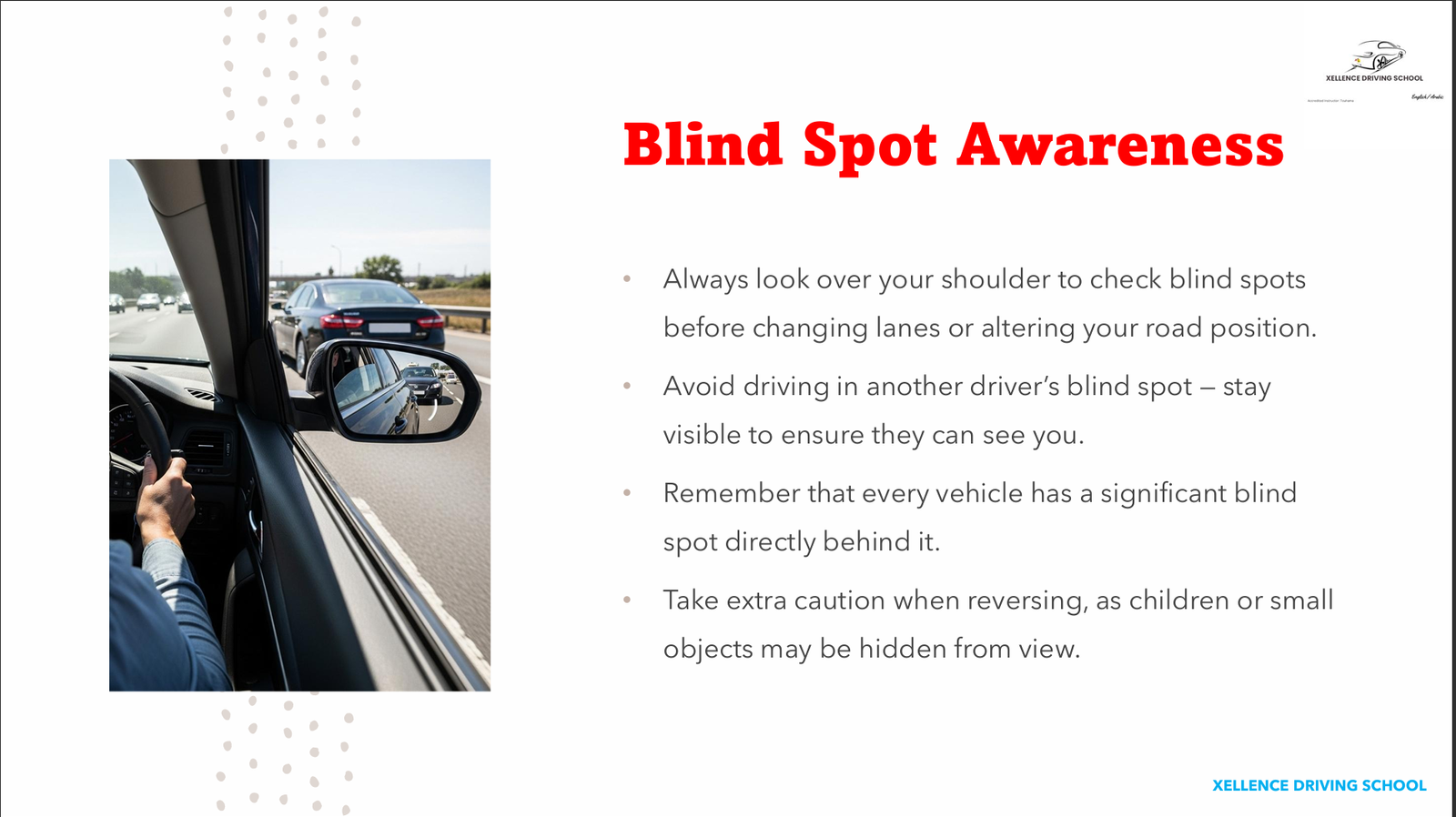
- Always look over your shoulder before changing lanes, merging, or adjusting road position. Mirrors alone are never enough.
- Avoid driving in someone else’s blind spot. If you can’t see their mirrors, they can’t see you. Stay visible and safe.
- Remember every vehicle has a significant blind spot directly behind it. Keep distance when following.
- Be especially cautious when reversing. Small children, pets, or low objects can easily disappear from your view.
At Xellence Driving School, we emphasize “360° awareness.” You should always know what’s happening around your vehicle — not just ahead of it. The more aware you are, the safer and smoother your driving becomes.
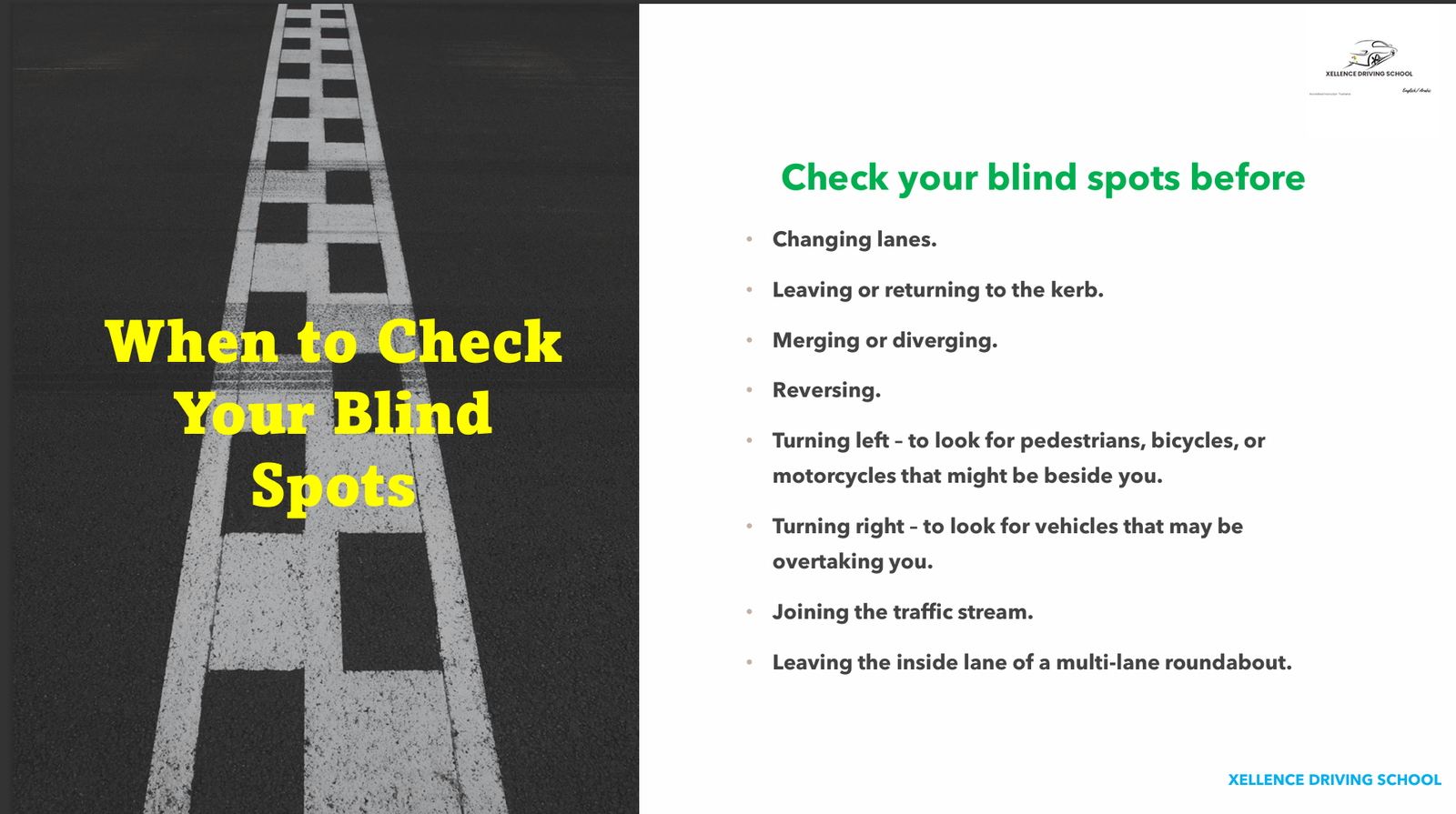
When to Check Your Blind Spots
Blind spot checks shouldn’t be random. They must be intentional and automatic, integrated into your driving routine until it becomes second nature.
You should check your blind spots before or during the following actions:
- Changing lanes. Always glance over your shoulder before moving sideways.
- Leaving or returning to the kerb. There may be cyclists or vehicles approaching from behind.
- Merging or diverging. Whether entering or leaving a lane, ensure it’s safe to move.
- Reversing. Check both sides and behind — mirrors alone won’t show everything.
- Turning left. Watch for pedestrians, cyclists, or motorcycles in the near lane.
- Turning right. Look for vehicles that may be overtaking you.
- Joining traffic. Before accelerating into the flow, confirm no one is beside or behind you in a blind area.
- Leaving the inside lane of a multi-lane roundabout. Many drivers miss this check — it’s one of the most overlooked and risky situations.
Checking your blind spots should feel as natural as using your indicators. It’s not a habit to develop “later” — it’s a skill that must be built from your very first driving lesson.
Final Tips
Before you get behind the wheel, remember these golden rules for safe driving:
- Always perform a quick head check before moving. A two-second glance could prevent an accident.
- Don’t rely solely on mirrors. Mirrors assist you, but your eyes confirm the truth.
- Signal early and change lanes smoothly — never make sudden moves.
- Avoid staying in others’ blind spots. Either slow down or accelerate to stay visible.
- When reversing, look carefully in every direction. Take your time — rushing often leads to costly mistakes.
Safe driving is a mindset, not a checklist. These habits don’t just help you pass your test — they make you a thoughtful, confident, and responsible driver for life.
Thank You – Learn from the Experts at Xellence Driving School
At Xellence Driving School, we believe good drivers aren’t born — they’re trained. Our mission is to turn every student into a confident, safety-focused driver who makes the right decisions instinctively.
With accredited instructors and modern training vehicles, we provide lessons tailored to your experience level. You’ll learn not just how to drive, but why certain habits — like checking blind spots — are crucial.